
View our case studies
Learn More





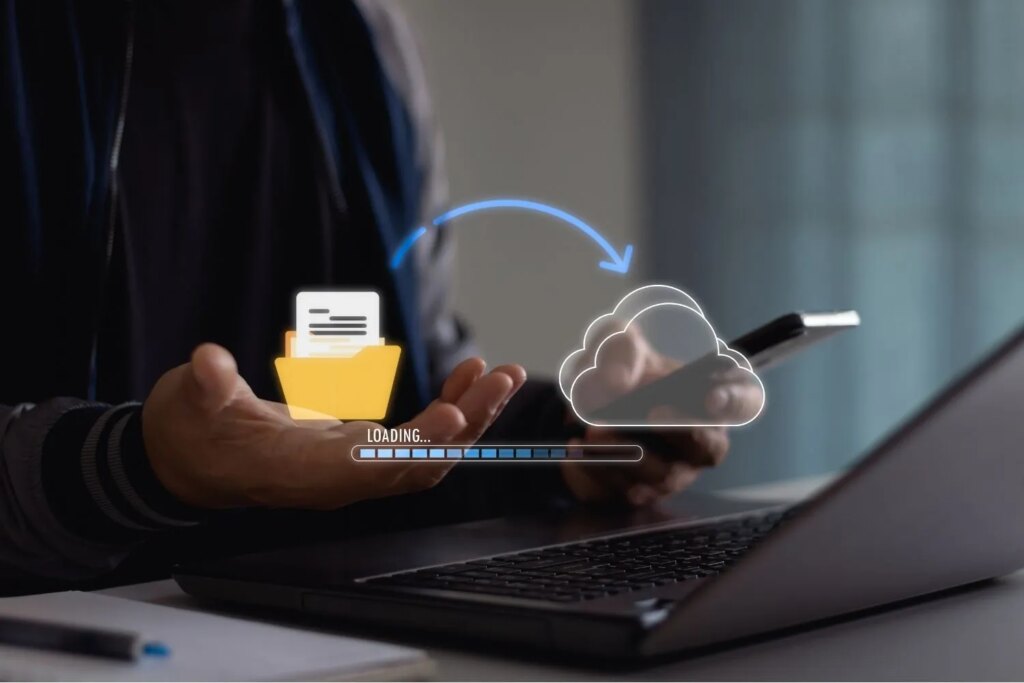
Why Businesses Are Moving to the Cloud
Technology environments evolve gradually over time. Many organisations find themselves managing a mixture of legacy ERP platforms, on-premise servers, local files, older access arrangements and newer Microsoft cloud tools such as Microsoft 365, SharePoint and OneDrive.
While these systems may continue to function, they often create limitations as businesses grow. Common drivers for cloud migration include:
- Increasing infrastructure maintenance requirements
- Limited remote access to ERP, files, email or business applications
- Difficulty scaling legacy ERP, server or file storage environments
- Rising hardware and infrastructure costs
- Security concerns around ageing servers, access controls, user permissions or unsupported software
Moving to modern cloud platforms allows organisations to simplify their technology environments while improving system flexibility and resilience.
Different Cloud Migration Routes for Different Systems
Cloud migration can mean different things depending on the systems your business uses. For some organisations, it means moving ERP, finance or operational systems into a modern cloud platform. For others, it means improving Microsoft 365, email, SharePoint, cloud access, servers or wider infrastructure.
ERP Cloud Migration
Support for moving ERP, finance or operational systems from legacy or on-premise environments into a modern cloud-based setup. This may include systems such as Dynamics NAV, Business Central, Sage or other ERP platforms, depending on your environment.
Microsoft 365 & Infrastructure Cloud Migration
Support for moving or improving email, SharePoint, OneDrive, user access, cloud collaboration, onsite servers, security and wider infrastructure. This route focuses on helping teams work securely and access systems reliably.
What Cloud Migration Can Improve
Moving ERP platforms, email, files, SharePoint, user access or infrastructure into the cloud can improve how teams work, access information and manage business-critical systems.
Accessibility and Flexibility
Cloud platforms allow employees to access ERP, email, files, SharePoint and business applications securely from different locations and devices.
This supports modern working environments where teams operate across offices, homes and mobile environments.
Infrastructure Simplicity
Cloud environments can reduce reliance on ageing servers, local storage and on-premise hardware.
This reduces infrastructure complexity and allows organisations to focus more on operations rather than system maintenance.
Improved System Scalability
Cloud platforms can scale more easily as organisations grow.
Businesses can add users, storage, Microsoft services or cloud-hosted applications without needing to significantly change on-site infrastructure.
Stronger Security and Resilience
Modern cloud environments often provide stronger security capabilities and system resilience than legacy infrastructure.
This helps organisations improve access control, protect business data and support availability across ERP, Microsoft 365, cloud and infrastructure environments.
WHY BUSINESSES WORK WITH Qi
Business-Led Guidance
We look beyond the software itself, taking time to understand your goals, processes and operational challenges before recommending the right solution.
Direct Access to Experts
You work with in-house consultants, developers and support specialists who understand your systems, reducing delays and unnecessary handovers.
Long-Term Support
We build lasting relationships with our clients, providing ongoing advice, support and system reviews as your business and technology needs evolve.
Connected IT, Security & Infrastructure Expertise
From ERP and Microsoft cloud solutions to reporting, automation, cyber security and infrastructure, Qi supports the systems that keep your business running securely and effectively.
Who Cloud Migration Is Designed For
Cloud migration solutions are particularly valuable for organisations that rely on legacy systems or on-premise infrastructure.
Businesses often explore migration when they:
- Run legacy ERP systems such as Dynamics NAV
- Depend on on-premise servers and infrastructure
- Want to improve remote system access
- Need more scalable technology platforms
- Are preparing for long-term digital transformation
Many organisations Qi supports are manufacturing businesses looking to modernise operational and financial systems.

How Qi Supports Cloud Migration
Successful cloud migration requires careful planning to ensure ERP platforms, Microsoft 365, files, users, data and infrastructure continue to support the business throughout the transition.
Cloud Readiness Assessment
Before migration begins, Qi reviews existing ERP, Microsoft 365, servers, files, data, users and access requirements to identify the most appropriate migration route
This helps ensure systems are prepared for a successful transition.
Structured Migration Planning
Migration projects are carefully planned so ERP data, email, SharePoint files, user access and infrastructure can transition smoothly where relevant.
Qi helps organisations manage the migration process while maintaining operational continuity.
System Implementation and Configuration
Once platforms, data or infrastructure are moved to the cloud, Qi helps configure the environment around how teams actually work.
This ensures systems remain secure, reliable and aligned with operational workflows.
Post-Migration Support
Following migration, Qi continues to support users, access, cloud services, ERP environments and infrastructure as the business adapts.
This ensures the benefits of cloud migration are fully realised.
Plan Cloud Migration with Cyber Essentials in Mind
Cloud migration is a good opportunity to review secure configuration, user access, device controls and wider infrastructure standards. Qi can help ensure your migration planning supports a stronger cyber security baseline and prepares your environment for Cyber Essentials readiness.
Why Businesses Choose Qi
Qi assists organisations dependent on older systems in transitioning to modern platforms while ensuring minimal disruption and reliable performance. Specialising in Microsoft platforms, Qi also supports ongoing system evolution to meet changing business needs.
Experience with Legacy Systems
Qi works with organisations that rely on older systems and helps them transition to modern platforms safely.
Structured Migration Approach
Migration projects are carefully planned to minimise disruption and ensure systems remain reliable throughout the process.
Microsoft Ecosystem Expertise
Qi specialises in Microsoft platforms, ensuring migrated systems integrate effectively with wider business environments.
Long-Term Technology Partnership
Qi supports organisations beyond migration, helping systems evolve as business needs change.
Thinking about moving your systems to the cloud?
Qi helps organisations migrate business systems to secure and scalable cloud environments that support modern operations and future growth.
Related Solutions
Businesses exploring cloud migration often review the following solutions.
Microsoft Dynamics 365 Business Central

Microsoft 365 & Office 365

Security & Infrastructure
Frequently Asked Questions
Why are cloud migration solutions important?
Legacy systems can limit flexibility and scalability; moving to cloud platforms provides a more flexible and scalable foundation for modern systems.
What drives businesses to move to the cloud?
Common drivers include increasing maintenance demands, limited remote access, difficulty scaling legacy platforms, rising infrastructure costs and security concerns.
What improvements come from cloud migration?
Migrating improves accessibility, simplifies infrastructure, enhances scalability and provides stronger security and resilience.
Who should consider cloud migration?
Organisations using legacy ERP systems or on‑premise infrastructure, needing remote access or more scalable platforms or preparing for digital transformation.
How does Qi support cloud migration?
Qi conducts readiness assessments, plans structured migrations, implements and configures cloud environments and provides post‑migration support.